Kar'esh: the philosophy of balance¶
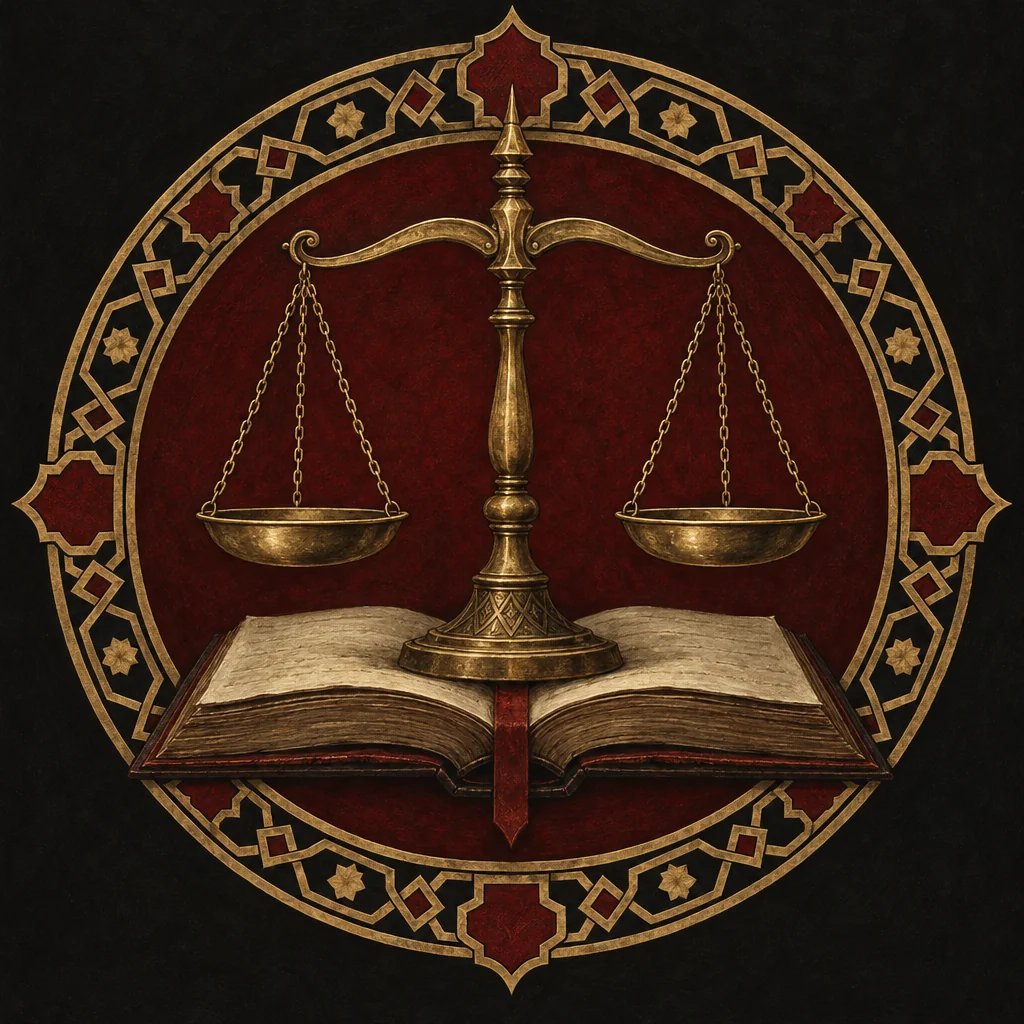
Locked The soul of Kaelen. Kaelen culture rests on one conviction: the world is a ledger, and it must balance.
(Kar'esh means "the Balance". The apostrophe marks an old Kilian compound.)
The core belief¶
Every life, death, kindness and wrong has a weight. The universe keeps accounts, and accounts always settle: if not in this life, then against your name, your house and your descendants. Fortune and ruin aren't random. They're the ledger collecting what's owed.
A Kaelen doesn't ask "why did this happen to me?" They ask "what was owed?"
A tangible comparison
Think of a family business where every favour is remembered. If your grandfather borrowed from the neighbour's grandfather and never paid it back, you still owe that family, and everyone in the village knows it. Kar'esh treats the whole universe like that village, and the ancestors are the bookkeepers.
How it shapes Kaelen life¶
| Practice | How Kar'esh explains it |
|---|---|
| Face and honour | Your face is your ledger's public balance. Losing face reveals an unsettled debt. A Kaelen fears dishonour and being forgotten more than death. |
| Ancestor veneration | The dead are entries that stay open. Households keep ancestor shrines, and the dead are consulted, fed, shamed and honoured. An unavenged ancestor is a weight on the whole line. |
| Martyrs | A death crying out to be balanced is a terribly dangerous symbol. That's why the Trade Prince's murder weighs so much, and why the Empire's attempt to erase Alyssa backfired. |
| Ledger-men ("counters") | The Jade Lotus's bookkeepers of blood, money, routes and informers. To a Kaelen they're priests of Kar'esh with knives, keeping the account that fate is supposed to keep. Sacred work made profane. |
| The coin toss | Ghost-9's ritual, which lets the coin decide whether a beaten enemy lives, is terribly pious to a Kaelen. A man removes his own will so that fate can settle the account. That's why it became a legend in the Empire and nowhere else. |
The Mandate: why the Empire is cracking¶
Draft A ruling-legitimacy idea, like the real-world Mandate of Heaven. A just reign is one where the accounts are settled. An unjust reign betrays itself through imbalance: famine, plague, defeat, omens.
Malakor poisoned his Emperor, conquered a nation by fraud, and died to an impossible thunder-weapon in the hand of a girl from a burned village. To every Kaelen this reads as the ledger violently correcting. A child on the throne, horse clans at the eastern wall, a conquered province in revolt: the balance is broken, and everyone feels it. That dread is the Empire's self-doubt, and the resistance can turn it into a weapon.
The deep theme: fate against choice¶
Locked Kar'esh is fatalism. The ledger is fixed, your debts are destiny, and you pay your balance rather than choose it.
Against it stands the heresy from the west and the sea: Alyssa's "anybody could" and Tristen's "is there a door". The claim is that the ledger isn't fixed, that people write it rather than fate, and that an account can be torn up and rewritten. The thunder-weapon is its emblem. Anybody could kill an emperor, not fate's chosen instrument but a common girl making a choice.
So the commonwealth endgame is a theological revolution. "A world with no kings, built by its people, for Kaelen and Aldorian both" is the most heretical thing you can say to a Kaelen. The war with Kaelen is fate against choice, dressed as a war of crowns.
Lotus symbolism¶
Draft The lotus means purity rising from mud. It's also the Syndicate's sigil. That tension, a sacred flower turned into the mark of assassins, is very Kaelen.
Still open¶
- Open Is there a state religion that the Throne embodies, or is legitimacy purely the Mandate plus the ancestors?
- Open Temples, clergy, festivals and the calendar. Examples: the autumn festival where Ashmar set a lantern on the river for Alyssa, and the mourning bells rung for six weeks after Malakor's death.
- Locked The Mandate's Kaelen name is Sorath, "heaven's favour" (R-021). Real steppe empires had a close match: the Turkic kut, a heaven-granted good fortune that a ruler could lose.
Sources¶
- Kaelen Codex, §3a and §3b
- Campaign handoff (Campaign Two), §2 and §4
- The Aldorian Codex: Lands Beyond, "The end of Alyssa Kruger"